
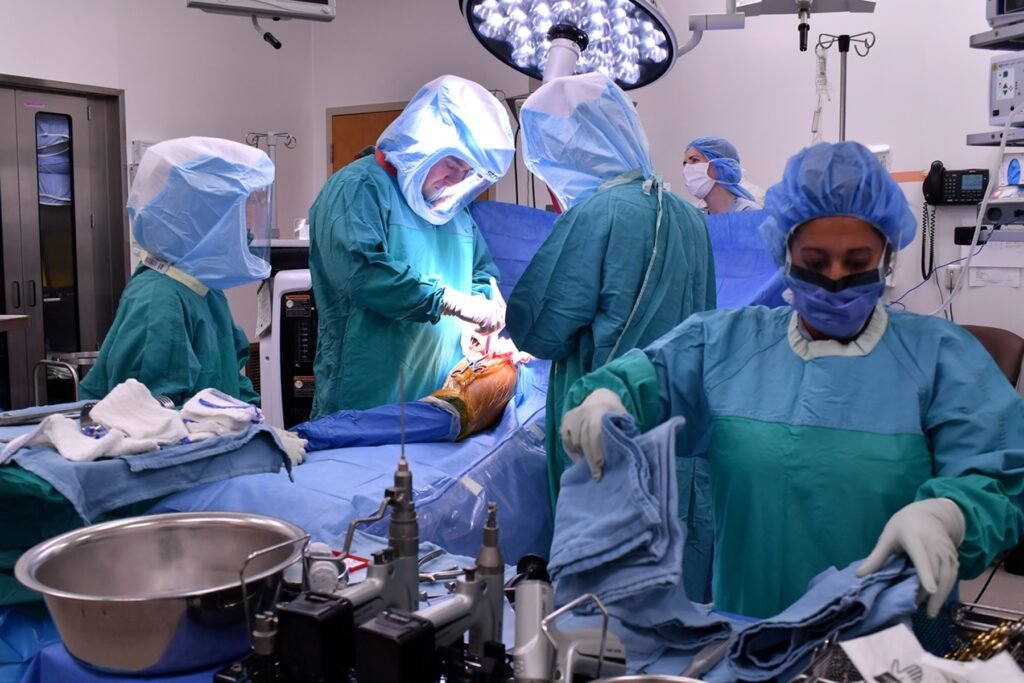
Arthroscopic surgery is a minimally invasive procedure used to diagnose and treat problems inside a joint through small incisions.
During the procedure, a small camera called an arthroscope is inserted into the joint. It provides a clear view of the damaged structures and allows the surgeon to assess and treat the problem using specialised instruments.
It is commonly used for sports injuries, ligament tears, cartilage damage and other conditions affecting the knee and shoulder.
Arthroscopic surgery may be considered when a joint injury or condition causes persistent pain, instability or restricted movement and does not improve adequately with non-surgical treatment.
You may need an evaluation if you experience:
Knee arthroscopy is a minimally invasive procedure used to examine and treat problems inside the knee joint.
Knee Arthroscopy May Be Considered For:
Shoulder arthroscopy helps address injuries affecting the rotator cuff, labrum and other structures responsible for shoulder stability and movement.
Shoulder Arthroscopy May Be Considered For:
The Anterior Cruciate Ligament (ACL) is one of the important ligaments that helps keep the knee stable.
An ACL tear can occur during sports, sudden changes in direction, awkward landings or other injuries. It may lead to instability, difficulty with certain activities and a feeling that the knee is giving way.
ACL reconstruction involves replacing the torn ligament with a suitable graft to help restore stability to the knee.
ACL Reconstruction May Be Considered For:
The meniscus is a cushion-like piece of cartilage in the knee that helps absorb shock and contributes to joint stability.
A sudden twist, sports injury or age-related wear can cause the meniscus to tear. Depending on the type, location and extent of the tear, treatment may involve repairing the meniscus or removing only the damaged portion when necessary.
Meniscus Surgery May Be Considered For:
The rotator cuff is a group of muscles and tendons that helps keep the shoulder stable and allows you to lift and rotate your arm.
A rotator cuff tear can occur due to a sudden injury or gradual wear and tear over time. It may cause pain, weakness and difficulty with overhead movements. Rotator cuff repair involves repairing the torn tendon and securing it back to the appropriate area of the shoulder.
Rotator Cuff Repair May Be Considered For:
Joint replacement surgery is performed under appropriate anaesthesia. The damaged surfaces of the joint are carefully prepared and replaced with specially designed artificial components.
The procedure is planned according to factors such as:
Recovery after arthroscopic surgery depends on the procedure performed and the extent of the injury.
A structured rehabilitation programme is an important part of recovery and helps restore movement, strength and function.
Depending on your procedure, you may be guided through:
Arthroscopic surgery offers several potential benefits compared with traditional open procedures in appropriate cases.
Potential benefits include:
The benefits and recovery experience vary depending on the procedure, the severity of the injury and the individual’s overall health.
Like any surgical procedure, arthroscopic surgery has potential risks and complications.
These may include:
No. Although arthroscopy is commonly used to treat sports-related injuries, it can also be used for certain degenerative conditions, cartilage problems and other joint conditions that cause persistent symptoms.
A meniscus tear may cause knee pain, swelling, stiffness, clicking, catching or locking. Some people may also experience difficulty fully bending or straightening the knee, particularly after a twisting injury.
Some ACL injuries may be managed without surgery depending on the extent of the tear, knee stability, activity level and individual requirements. However, certain complete tears or injuries causing significant instability may require ACL reconstruction.
The recovery period depends on the procedure performed and the condition being treated. Simple procedures may allow a quicker return to daily activities, while ACL reconstruction and rotator cuff repair generally require a more structured and longer rehabilitation period.
Many patients can work towards returning to sports after ACL reconstruction, but the timing depends on healing, strength, stability and rehabilitation progress. A gradual, medically guided return is important to reduce the risk of re-injury.